
Introduction
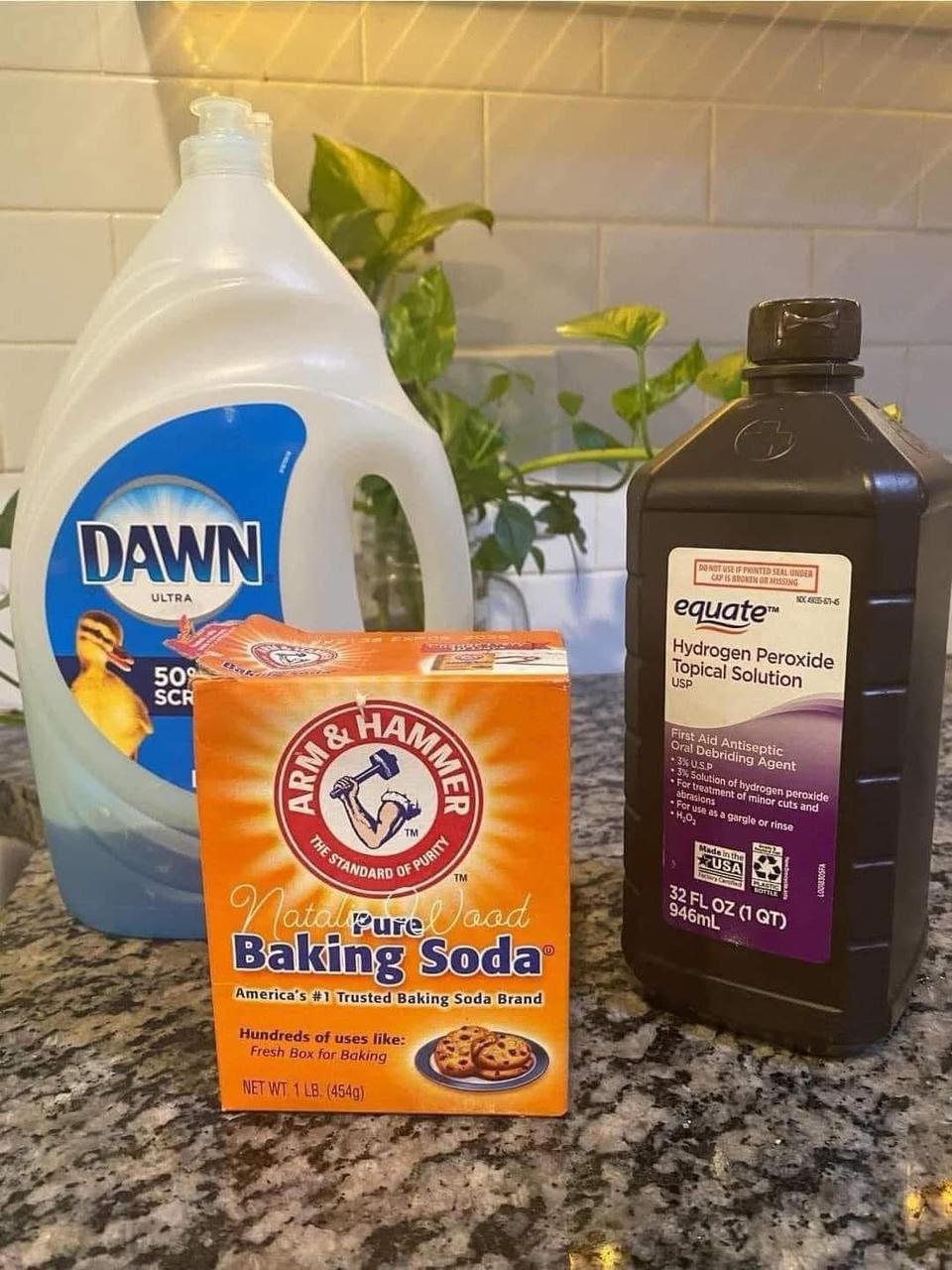
Set-in stains can be frustrating, especially when regular washing does not remove them. This simple DIY stain-treatment paste combines dishwashing liquid, baking soda, and 3% household hydrogen peroxide. The dish soap helps loosen oily residue, baking soda provides gentle scrubbing action, and hydrogen peroxide may help brighten certain washable fabrics.
While this mixture can be useful for some stains, results depend on the fabric, dye, and type of stain—so it is not a guaranteed replacement for every commercial stain remover.
Origin
Homemade cleaning mixtures have long been part of household cleaning traditions. Combining common pantry and laundry ingredients became popular because these products are inexpensive and widely available.
This particular combination is a modern DIY cleaning method that uses the cleaning properties of dish soap, the mild abrasive action of baking soda, and the oxidizing action of household-strength hydrogen peroxide.
Cultural Significance
DIY cleaning remedies are popular around the world because they encourage resourcefulness and the use of familiar household products. Many families pass down practical cleaning tips from one generation to another.
Today, these remedies are also widely shared online as alternatives for everyday cleaning challenges.
Ingredients & Quantity
- 1 teaspoon dishwashing liquid
- 3–4 tablespoons 3% hydrogen peroxide
- 2 tablespoons baking soda, or enough to create a spreadable paste
Important: Use ordinary 3% household hydrogen peroxide, not concentrated or “food-grade” peroxide. Higher concentrations can cause serious injury.
Optional Additions
For tougher washable-fabric stains, you may adjust the texture by adding:
- A little more baking soda for a thicker paste.
- A few extra drops of dish soap for greasy stains.
Avoid adding random cleaning chemicals. In particular, do not mix this mixture with bleach, vinegar, ammonia, or other cleaning products unless a product label specifically says it is safe. Poison-control guidance recommends avoiding mixtures of household cleaners because some combinations can create harmful reactions or fumes.
Tips for Success
- Always test the mixture on a small, hidden area of the fabric first.
- Use only on colorfast, washable materials.
- Wear gloves if your skin is sensitive.
- Work in a well-ventilated area.
- Keep the original products in their original containers and away from children and pets.
- Do not prepare a large batch for storage in a sealed container.
- Rinse the treated area thoroughly before laundering.
- Check the care label before treating delicate fabrics such as silk, wool, or leather.
Household 3% hydrogen peroxide can cause irritation, especially to the eyes and skin, and concentrated forms are more hazardous.
Instructions
- In a small bowl, combine 1 teaspoon of dishwashing liquid, 3–4 tablespoons of 3% hydrogen peroxide, and about 2 tablespoons of baking soda.
- Stir until a soft paste forms.
- Apply a small amount directly to the stained area.
- Gently work the mixture into the fabric with a soft scrubbing brush or old toothbrush. Avoid aggressive scrubbing that could damage the fibers.
- Let the treatment sit briefly, following the fabric’s tolerance and checking for any color change.
- Rinse thoroughly with cool water.
- Wash the item according to its care label.
- Check that the stain is gone before using heat, as heat may make some stains more difficult to remove.
Description
The finished mixture is a slightly gritty cleaning paste. The baking soda provides mild mechanical cleaning, the dish soap helps lift oily residue, and the hydrogen peroxide may assist with brightening and treating certain discolorations.
This method may be especially worth trying on washable fabrics with older stains, but stubborn stains can require repeated treatment or a fabric-specific stain remover.
Nutritional Information
Not applicable — this is a household cleaning mixture and is not food. Do not eat or drink any of the ingredients or the finished mixture. Household cleaning products and hydrogen peroxide should only be used as directed and kept away from children.
Conclusion
This three-ingredient DIY paste can be a useful option for treating some stubborn stains with products already found at home. However, it should be used carefully, tested on a hidden area first, and never mixed with additional cleaning chemicals.
Recommendation
For best results, use this mixture as a spot treatment rather than a universal cleaner. Always check the fabric care label, use 3% hydrogen peroxide only, and stop using the treatment if you notice fading or damage.
For general household hygiene, remember that cleaning and disinfecting are different: in many everyday situations, soap, water, and physical cleaning are sufficient.
Embracing Safer Home Cleaning
Homemade cleaning methods can be practical, affordable, and effective for specific tasks. The key is not simply using more ingredients, but using familiar products carefully and appropriately.
With a small amount of dish soap, baking soda, and properly handled 3% hydrogen peroxide, this DIY stain paste may become a useful addition to your laundry routine—without assuming that one mixture will work perfectly on every stain.