
Introduction
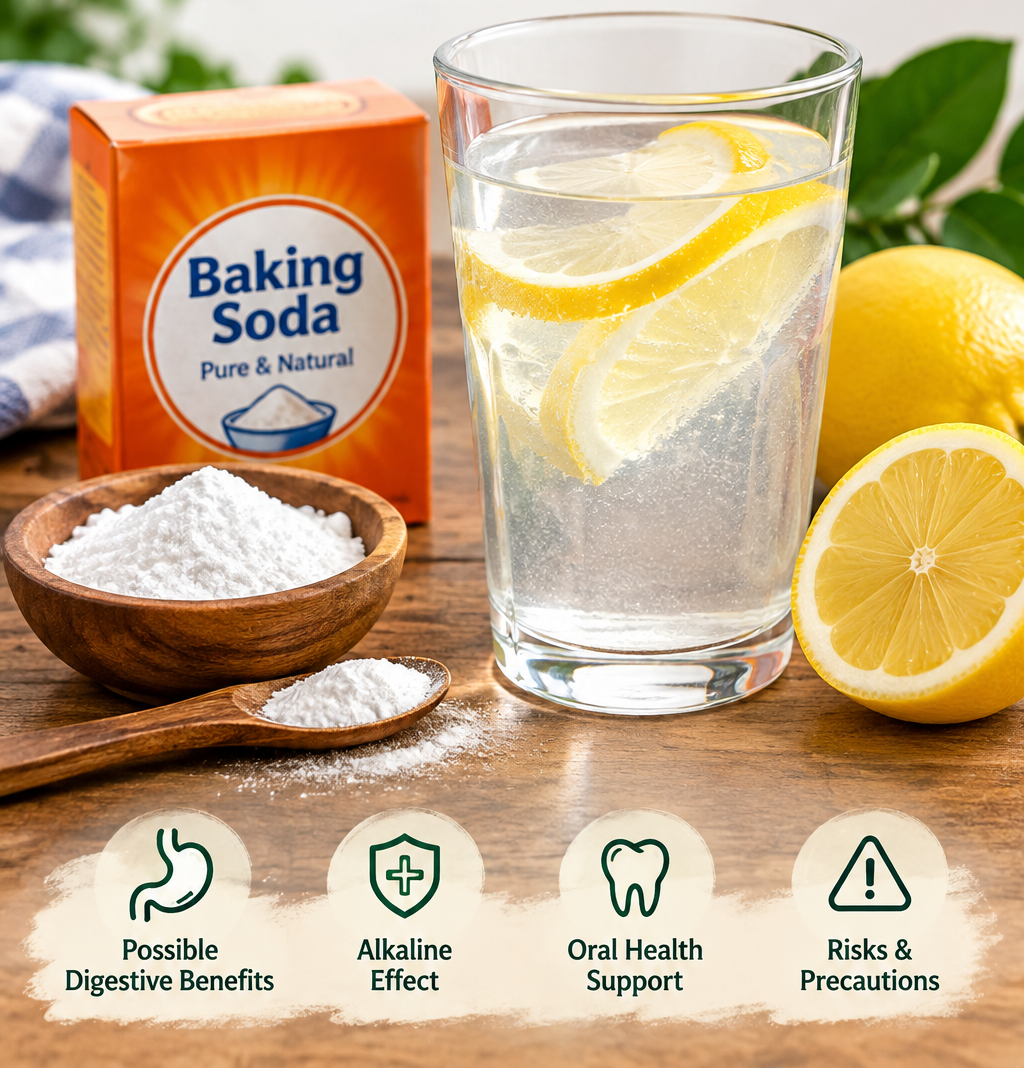
Baking soda and lemon water is a simple homemade drink that has become popular in wellness circles. Supporters often describe it as a detox drink, digestive aid, or way to “balance” the body. However, many of these claims go beyond what scientific evidence supports.
Lemon provides water, vitamin C, and a refreshing citrus flavor, while baking soda (sodium bicarbonate) is an alkaline compound containing sodium. When the two are combined, they react with the lemon’s citric acid, producing bubbles of carbon dioxide and forming new compounds.
The drink may be harmless for some healthy adults when prepared in small amounts, but drinking baking soda regularly is not automatically healthier than drinking plain lemon water. Excessive sodium bicarbonate can cause digestive discomfort and, in large amounts, potentially serious electrolyte and acid-base disturbances.
Origin
Lemon water has a long history as a simple flavored beverage. Citrus fruits have been cultivated for centuries across Asia and later became widespread throughout the Mediterranean and other regions.
Baking soda became widely used as a household ingredient because of its ability to help baked goods rise, neutralize acids, and clean surfaces. The modern combination of baking soda with lemon water is primarily associated with contemporary home remedies and wellness trends rather than a traditional medicinal beverage with a single documented origin.
Cultural Significance
Lemon-based drinks appear in many culinary traditions, particularly in warm climates where citrus and refreshing beverages are popular. Lemon water is commonly associated with freshness and hydration.
Baking soda has also played an important role in home cooking and traditional household remedies. Its ability to neutralize stomach acid explains why sodium bicarbonate has historically been used as an occasional antacid.
Today, combining lemon and baking soda is often promoted online as a “natural” wellness ritual. It is important to distinguish cultural or popular use from medically established benefits.
Ingredients Quantity
For a simple, mild beverage:
- 250 ml (1 cup) of drinking water
- 1–2 teaspoons of fresh lemon juice
- A very small pinch of baking soda, if you choose to include it
You do not need baking soda to make lemon water. For everyday hydration, plain water or lemon-infused water is the simpler option.
Because baking soda contains a substantial amount of sodium, avoid treating larger quantities as a routine health drink.
Optional Additions
For flavor, you can add:
- A few slices of fresh lemon
- Fresh mint leaves
- A small piece of ginger
- Cucumber slices
- A small amount of honey for sweetness
These additions can improve flavor without requiring a large amount of baking soda.
Tips for Success
- Start with lemon water alone. If your goal is hydration, baking soda is unnecessary.
- Use only a tiny amount of baking soda. More is not better.
- Let the fizz settle. Lemon juice and baking soda react immediately and release carbon dioxide.
- Do not use it as a detox treatment. Your liver and kidneys already perform the body’s major waste-processing functions.
- Consider your sodium intake. Regular baking-soda consumption can add significant sodium to the diet.
- Be cautious if you take medications. Sodium bicarbonate can affect stomach acidity and may interfere with the absorption or action of some medicines.
- Avoid using large quantities for heartburn without medical advice. Persistent heartburn may require evaluation rather than repeated self-treatment.
Instructions
- Pour 250 ml of water into a glass.
- Add 1–2 teaspoons of fresh lemon juice.
- If you decide to use baking soda, add only a small pinch.
- Stir gently and allow the fizzing reaction to settle.
- Drink slowly rather than consuming a concentrated mixture quickly.
- Stop if you experience nausea, abdominal pain, unusual bloating, or other unpleasant symptoms.
For a daily refreshing beverage, simply omit the baking soda and enjoy lemon water instead.
Description
Baking soda and lemon water is a fizzy, mildly citrus-flavored beverage created by combining acidic lemon juice with alkaline sodium bicarbonate. The reaction produces carbon dioxide, which causes the characteristic bubbling.
Although the drink is frequently marketed online as a cleansing or alkalizing beverage, drinking it does not meaningfully “alkalize” the whole body. Blood pH is tightly regulated by the lungs and kidneys, and consuming an alkaline ingredient does not simply change it in a beneficial way.
The lemon itself can contribute vitamin C and flavor, while the water contributes to hydration. The baking soda primarily adds sodium and alkalinity.
Nutritional Information
The exact nutritional content depends on the amount of lemon juice and any sweeteners added.
A glass made with water and a small amount of lemon juice is:
- Calories: Very low
- Fat: Essentially none
- Protein: Essentially none
- Carbohydrates: Low
- Vitamin C: A small amount from the lemon
- Sodium: Very low from the lemon water itself, but significantly higher when baking soda is added
Baking soda is not a source of meaningful vitamins, minerals, protein, or fiber. Its main nutritional consideration is sodium.
People who need to restrict sodium, have certain kidney or heart conditions, or have been advised to monitor their electrolyte intake should speak with a healthcare professional before regularly consuming sodium bicarbonate.
Conclusion
Baking soda and lemon water can be an interesting homemade beverage, but its popularity should not be confused with proven health benefits. Lemon water can be a pleasant way to drink more fluids, while baking soda is mainly useful as a culinary ingredient and, in appropriate circumstances, an antacid.
There is no good evidence that regularly drinking this mixture detoxifies the body, causes meaningful weight loss, or “balances” the body’s overall pH.
For most people looking for a refreshing wellness drink, lemon water without baking soda is the simpler choice.
Recommendation
If you enjoy the flavor, make lemon water your everyday option and treat baking soda as an occasional ingredient rather than a daily supplement.
If you are considering baking soda because of frequent heartburn, digestive symptoms, or another health concern, it is better to identify and address the underlying problem with a healthcare professional instead of relying on repeated doses.
Never consume large amounts of baking soda as a home remedy. Seek urgent medical help if a large quantity has been swallowed, particularly if symptoms such as vomiting, severe abdominal pain, confusion, weakness, difficulty breathing, or unusual swelling occur.
Embracing Healthful Indulgence
Healthy habits do not need to depend on complicated wellness trends. A glass of cool water with fresh lemon can be refreshing, flavorful, and easy to incorporate into a balanced lifestyle.
The healthiest approach is to appreciate simple ingredients for what they genuinely offer rather than expecting one homemade drink to transform your health. Enjoy lemon water for its taste and hydration, maintain a varied diet, and use baking soda appropriately and sparingly.