
Introduction
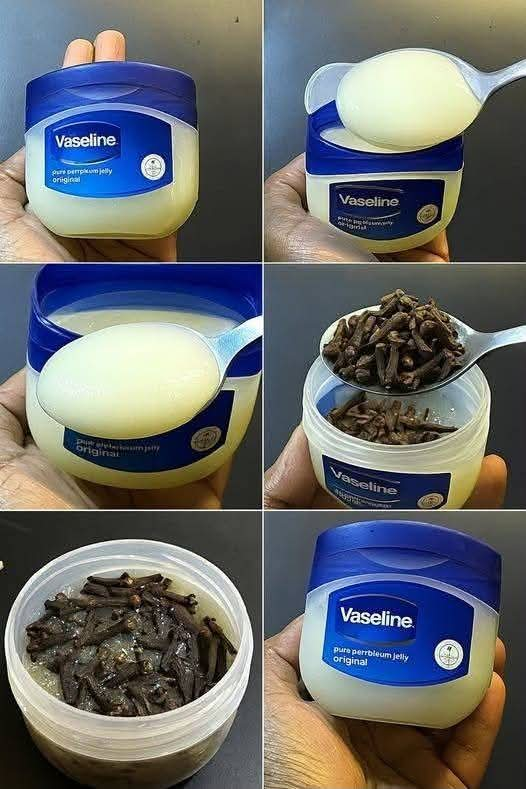
Cloves and petroleum jelly are sometimes combined in homemade skincare routines. Cloves contain aromatic compounds and antioxidants, while petroleum jelly acts mainly as an occlusive moisturizer that helps reduce moisture loss from the skin.
Origin
Cloves come from the dried flower buds of the clove tree, traditionally cultivated in Indonesia and used for centuries in Asian, Middle Eastern, and African culinary and traditional practices. Petroleum jelly, meanwhile, became widely used as a protective skin barrier in the 19th century.
Cultural Significance
Cloves have a long history in traditional beauty and wellness practices. In some cultures, ground cloves or clove-infused preparations have been used in household skincare recipes. However, traditional use doesn’t necessarily mean a mixture is proven to provide specific skin benefits.
Ingredients & Quantity
1 tablespoon petroleum jelly
¼ teaspoon very finely ground cloves
Optional Additions
1–2 drops of plain vitamin E oil, if tolerated
A small amount of fragrance-free moisturizer for easier spreading
Important: Clove can irritate skin, especially when concentrated. Avoid using clove oil directly on the skin.
Tips for Success
Use only a small amount of ground clove.
Perform a small patch test first.
Avoid the eyes, lips, broken skin, and irritated areas.
Stop using it if you experience burning, redness, itching, or swelling.
For sensitive skin, plain petroleum jelly is generally the simpler choice.
Instructions
1. Place 1 tablespoon of petroleum jelly in a clean container.
2. Add ¼ teaspoon of finely ground cloves.
3. Mix thoroughly until evenly distributed.
4. Apply a very thin layer to a small area of intact skin.
5. Leave it on briefly and wash it off if irritation occurs.
Description
The mixture creates a thick, occlusive preparation with the characteristic warm aroma of cloves. Petroleum jelly provides the main moisturizing/barrier effect, while cloves primarily contribute fragrance and plant compounds.
Nutritional Information
This is a topical preparation, not a food, so nutritional information such as calories, protein, carbohydrates, and fat is not applicable. Do not eat the mixture.
Conclusion
Clove and petroleum jelly can be combined as a simple homemade topical preparation, but there is limited evidence that the combination provides special skincare benefits. Petroleum jelly itself is the more established ingredient for protecting and moisturizing dry skin.
Recommendation
For everyday dry-skin care, plain petroleum jelly is usually preferable because it avoids the potential irritation associated with cloves. If you want to experiment with a clove-containing preparation, use a very small concentration and patch-test first.
Embracing Healthful Indulgence
Healthy skincare doesn’t have to mean complicated recipes. A gentle, consistent routine using well-tolerated products is often more useful than strongly scented or highly concentrated DIY mixtures. 🌿✨