
Introduction
As we get older, our skin naturally becomes thinner, drier, and more prone to roughness and visible fine lines. This is especially noticeable during the 60s and 70s, when the skin can lose moisture more easily and become more sensitive to harsh products.
The good news is that an elaborate skincare routine isn’t always necessary. A simple overnight moisturizing balm can help soften dry areas and give mature skin a smoother, more comfortable appearance by morning.
The key is not a miracle ingredient. Instead, the goal is to combine rich moisturizing ingredients with an occlusive ingredient that helps reduce moisture loss while you sleep.
Origin
The idea behind an overnight balm comes from a long tradition of using oils, butters, and protective ointments to care for dry skin. Modern dermatology has refined this concept by recommending creams and ointments containing ingredients such as petrolatum, shea butter, glycerin, mineral oil, and other moisturizing agents.
Today, the same basic principle can be adapted into a simple bedtime skincare ritual for mature skin.
Cultural Significance
Across many cultures, natural oils and plant butters have traditionally been used to protect and soften dry skin. Shea butter, for example, has a long history of cosmetic use in Africa, while various plant oils have been incorporated into traditional beauty routines around the world.
Modern skincare doesn’t necessarily require abandoning these traditions. Instead, simple moisturizing practices can be combined with dermatologist-recommended approaches such as fragrance-free products, gentle cleansing, and regular moisturization.
Ingredients & Quantity
Simple Overnight Balm
- 1 tablespoon plain, fragrance-free moisturizing cream
- 1 teaspoon petrolatum (such as petroleum jelly)
- ½ teaspoon shea butter, preferably refined and fragrance-free
- 2–3 drops jojoba oil, optional
Petrolatum is particularly useful as an occlusive because it helps reduce water loss from the skin. Dermatologists also recommend creams or ointments over lighter lotions for very dry skin.
Optional Additions
Depending on your skin and the products you already tolerate, you can consider:
- A fragrance-free moisturizer containing ceramides
- A moisturizer containing glycerin
- A moisturizer containing hyaluronic acid
- A small amount of a gentle, fragrance-free facial oil
Ceramides, glycerin, shea butter, and other moisturizing ingredients are commonly recommended for dry skin.
Avoid adding lemon juice, baking soda, toothpaste, undiluted essential oils, or other potentially irritating ingredients to a facial balm.
Tips for Success
1. Start with slightly damp skin.
After gently cleansing, pat your face dry but leave a little moisture on the skin. Applying moisturizer while the skin is slightly damp can help retain hydration.
2. Use a small amount.
A thick layer isn’t necessarily better. A thin layer of balm is usually enough to seal in moisture.
3. Choose fragrance-free products.
Mature skin can become more sensitive with age. The American Academy of Dermatology recommends fragrance-free skincare for dry, irritated skin.
4. Don’t rub aggressively.
Use gentle upward or outward motions with your fingertips. There is no need for vigorous massage.
5. Patch-test new products.
If you’re introducing a new ingredient, test a small amount on an inconspicuous area first.
6. Keep expectations realistic.
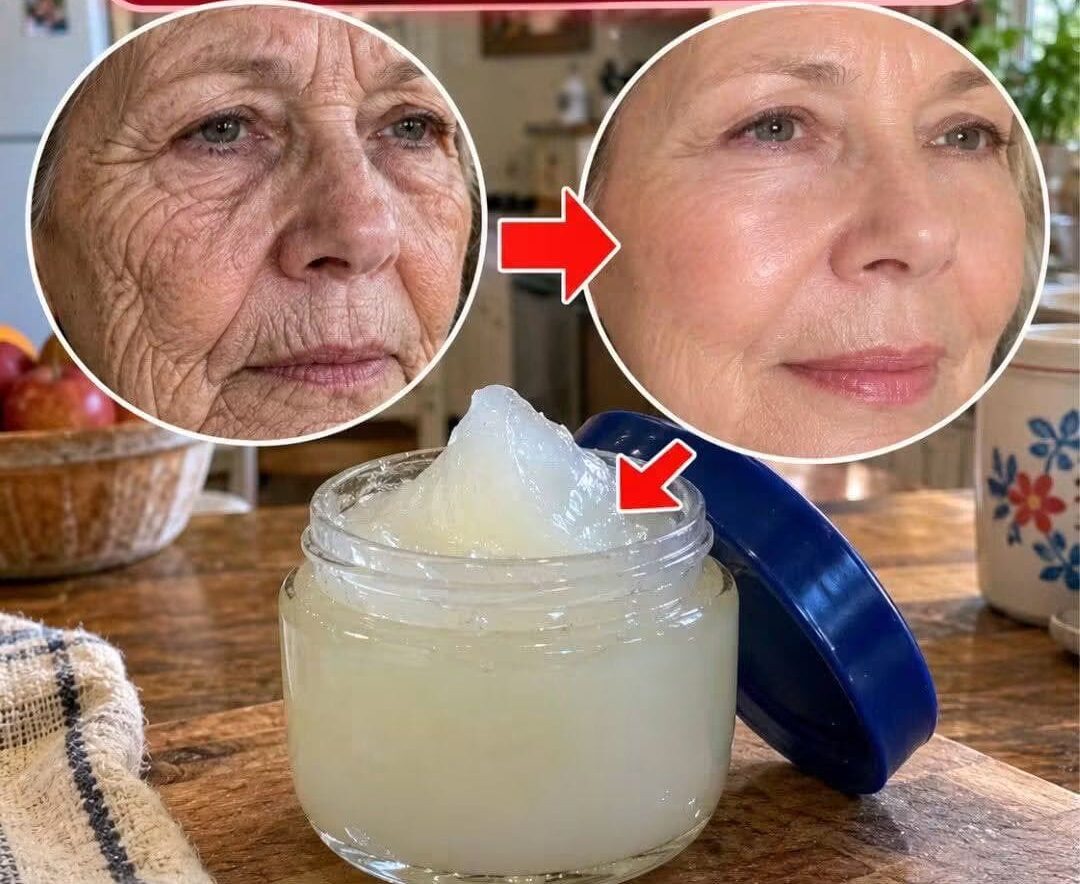
The balm can make skin look temporarily plumper and smoother because moisturization reduces the appearance of fine lines. It does not permanently remove wrinkles overnight.
Instructions
Step 1: Cleanse
Wash your face with a gentle, fragrance-free cleanser and lukewarm water. Avoid very hot water because it can increase dryness.
Step 2: Moisturize
Apply a small amount of your regular fragrance-free moisturizer to slightly damp skin.
Step 3: Seal
Mix a pea-sized amount of the moisturizer with a tiny amount of petrolatum and, if desired, a little shea butter.
Step 4: Apply
Gently spread a thin layer over areas that tend to become especially dry, such as the cheeks, around the mouth, or forehead.
Avoid getting the mixture into your eyes.
Step 5: Leave Overnight
Allow the balm to remain on the skin while you sleep. In the morning, cleanse gently if needed and follow with your normal daytime moisturizer and sunscreen.
For daytime protection, dermatologists recommend broad-spectrum sunscreen with SPF 30 or higher because UV exposure contributes significantly to visible skin aging.
Description
This simple bedside balm is best thought of as a moisture-sealing treatment, rather than a miracle anti-aging cure. The moisturizer provides hydration, while the petrolatum helps create a protective barrier that reduces moisture loss.
By morning, dry skin may feel softer and more comfortable, while fine lines can temporarily appear less noticeable because well-moisturized skin looks more supple.
Nutritional Information
Because this is a topical skincare preparation rather than food, traditional nutritional information such as calories, protein, carbohydrates, fat, or vitamins per serving does not apply.
Instead, its relevant skincare properties include:
- Petrolatum: occlusive moisture barrier
- Shea butter: emollient that helps soften dry skin
- Glycerin, if present in the moisturizer: humectant that helps attract and retain water
- Ceramides, if present: support the skin barrier
- Jojoba oil: emollient that can help improve the feel of dry skin
Conclusion
At 72, beautiful skin doesn’t have to mean using dozens of expensive products. A gentle routine centered around hydration and protecting the skin barrier can make a meaningful difference in how mature skin feels and looks.
A simple overnight balm can be particularly helpful when dryness makes fine lines appear more pronounced. The effect is primarily cosmetic and temporary, but softer, more comfortable skin is still a worthwhile result.
Recommendation
For mature skin, keep the routine simple:
Gentle cleanser → moisturizer → thin layer of protective balm at night.
During the day, add broad-spectrum SPF 30 or higher to help protect against further UV-related skin aging.
If your skin becomes persistently itchy, painful, inflamed, cracked, or develops a new unusual spot, it’s better to consult a dermatologist rather than treating it solely with a homemade balm.
Embracing Healthful Indulgence
Skincare can be a small act of self-care rather than a battle against aging. Fine lines and wrinkles are a natural part of growing older, and the goal doesn’t have to be perfectly smooth skin.
Instead, focus on keeping the skin comfortable, hydrated, protected, and healthy-looking. A few quiet minutes before bed, a gentle moisturizer, and a protective layer can turn a basic routine into a relaxing nightly ritual.
The simplest approach is often the most sustainable: hydrate, seal, protect, and let your skin age with care.